



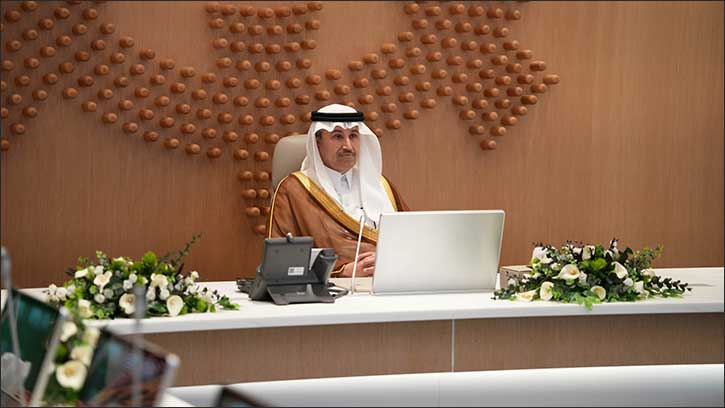
RIYADH, Saudi Arabia, March 12, 2026: H.E. the Minister of Transport and Logistics Services and Chairman of the Board of the Saudi Ports Authority “Mawani”, Eng. Saleh bin Nasser Al‑Jasser, launched the Logistics Corridors Initiative in the presence of H.E. the Governor of the Zakat, Tax and Customs Authority (ZATCA), Eng. Suhail bin Mohammed Abanmi, and the President of Mawani, Eng. Suliman bin Khalid Al‑Mazroua, along with a number of officials from government entities and the logistics sector. The initiative aims to provide operational corridors dedicated to receive containers and cargo redirected from ports in the Kingdom’s Eastern Region and from ports in Gulf Cooperation Council countries to Jeddah Islamic Port and other Saudi ports on the Red Sea coast, thereby enhancing supply chain efficiency and facilitating cargo movement between the Kingdom’s ports.
During his field visit, the Minister highlighted the strong support that the transport and logistics ecosystem receives from King Salman bin Abdulaziz Al Saud, the Custodian of the Two Holy Mosques, and the Crown Prince. He emphasized that Saudi Arabia, as a global logistics hub, continues under all circumstances to ensure supply chain stability, support regional and global markets, and maintain the smooth flow of goods and commodities through international trade routes. Al-Jasser noted that Jeddah Islamic Port and other Saudi ports on the western coast play a pivotal role by accommodating shipments and containers redirected from ports on the Kingdom’s eastern coast, receiving containers arriving from Gulf ports, and strengthening connectivity with regional and global markets.
He also stressed the high level of readiness within the Kingdom’s transport and logistics system, as well as its diverse capabilities to respond swiftly to supply chain requirements. He praised the strength of Saudi Arabia’s infrastructure and the flexibility of its logistics services, which have enabled the Kingdom to respond rapidly to current developments and activate alternative logistics corridors to ensure the continuity of trade and supply chains in the region.
Al-Jasser added that the transport and logistics ecosystem, supported by the significant facilitation provided by the Kingdom’s leadership, continues to operate efficiently by expanding the operational capacity of ports, airports, and transport networks, ensuring stable supply chains and supporting local and regional markets with reliability and efficiency.
For his part, H.E. the Governor of the Zakat, Tax and Customs Authority, Eng. Suhail bin Mohammed Abanmi, stated that the Logistics Corridors Initiative represents an important step toward enhancing the integration of customs and logistics procedures between Saudi ports and ports across the Gulf Cooperation Council countries. He noted that ZATCA is working in coordination with relevant entities to facilitate cargo movement and accelerate customs clearance procedures, thereby supporting smooth supply chains and improving the efficiency of regional and international trade flows.
Abanmi added that through all customs ports across the Kingdom, the Authority provides the transit service, which enables goods to be transported across Saudi territory to GCC countries via land, sea, and air ports. In addition, the Authority offers services through bonded warehouse zones across the Kingdom, allowing importers and exporters to store goods with suspended duties and taxes while managing them flexibly and efficiently before customs clearance or re-exporting them outside the Kingdom.
These services contribute to facilitating trade movement, accelerating supply chain operations, and strengthening the Kingdom’s position as a global logistics hub
He affirmed that these efforts reflect the Kingdom’s role in supporting integrated supply chains and enhancing the smooth flow of international trade, reinforcing its standing as a logistics hub that facilitates the movement of goods and supports trade flows between countries.
Meanwhile, the President of Mawani, Eng. Suliman bin Khalid Al-Mazroua, stated that these corridors are the result of the leadership’s support, strong integration with government entities, and partnership with the private sector to ensure the continuity of supply chains and enhance the smooth flow of cargo. He emphasized that Saudi ports possess advanced operational capabilities and integrated infrastructure that have enabled them to accommodate shifts in global trade flows and efficiently receive redirected containers and cargo, particularly through the western coast ports led by Jeddah Islamic Port. This reflects the readiness, capacity, and operational efficiency of Saudi ports in supporting regional and global trade.
During his visit to the port, the Minister of Transport and Logistics Services chaired a meeting at the Command and Control Center at Jeddah Islamic Port, where he was briefed on cargo handling operations, vessel traffic, and loading and offloading activities. He then conducted a field tour inspecting container terminals, logistics parks, and re-export centers within the port. At the conclusion of the visit, he met with port employees, commending their efforts and praising the strong cooperation and effective coordination among public and private sector entities in implementing the leadership’s directives in this vital sector.
It is worth noting that Jeddah Islamic Port is the largest hub port on the Red Sea and one of the most important logistics centers in the region. Saudi ports along the Red Sea coast also have a combined annual capacity exceeding 18.6 million TEUs, strengthening their ability to support international trade and accommodate shifts in global supply chain routes.