


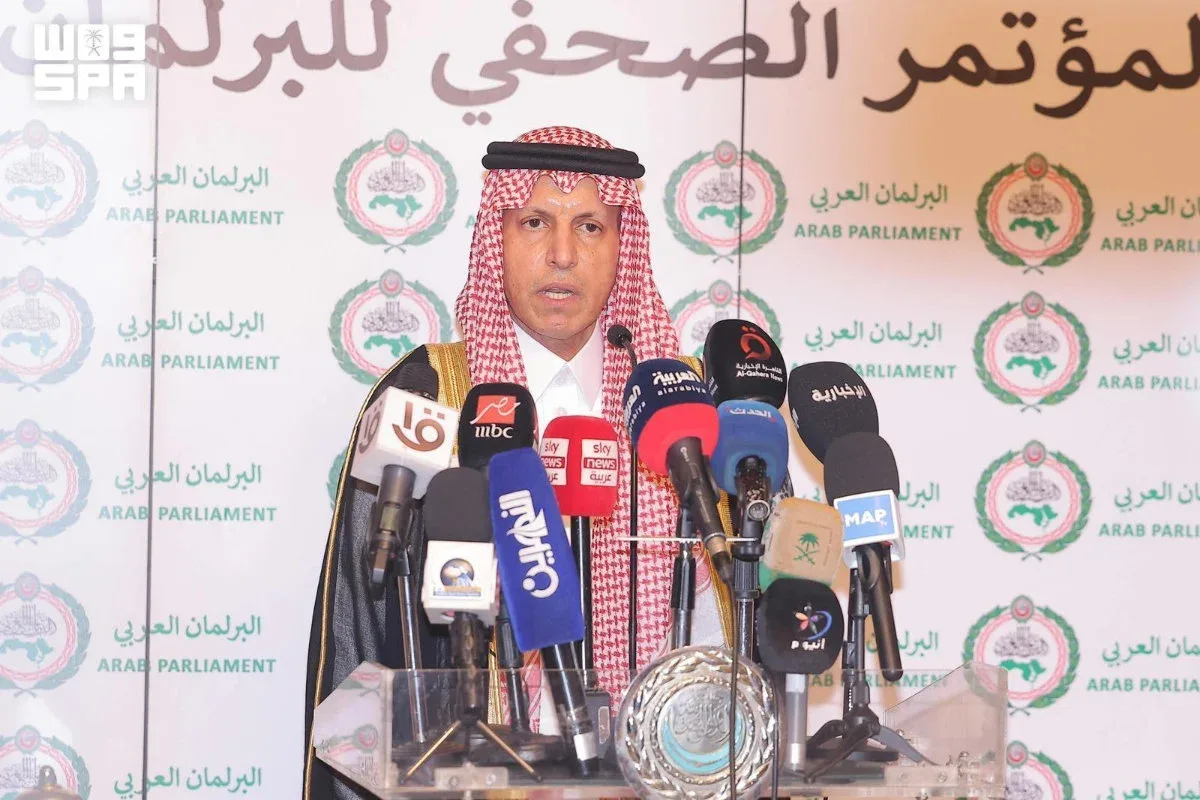
CAIRO: Saudi Shoura Council member Saad Al-Otaibi was elected unopposed as president of the Arab Parliament on Saturday during a procedural session held at the Arab League headquarters in Cairo, according to the Saudi Press Agency (SPA).
In his acceptance speech, Al-Otaibi said his election reflected Saudi Arabia's standing in the Arab world and its commitment to supporting joint Arab action and regional solidarity.
He thanked King Salman and Saudi Crown Prince Mohammed bin Salman for what he described as their continued support for Saudi talent, and also expressed appreciation to Shoura Council Speaker Sheikh Abdullah bin Mohammed bin Ibrahim Al Al-Sheikh.
Al-Otaibi said Arab parliamentary work should move beyond broad aspirations toward measurable programs with clear performance indicators, stressing that Arab unity was essential to addressing regional challenges and safeguarding common interests.
He said the Palestinian issue would remain the Arab Parliament's top priority, reiterating support for the establishment of an independent Palestinian state with East Jerusalem as its capital in line with international resolutions and the Arab Peace Initiative.
The newly elected president also called on members to strengthen cooperation and enhance the parliament's role as a collective voice for Arab causes at regional and international levels.
Following the election, Al Al-Sheikh said Al-Otaibi's election reflected confidence in Saudi capabilities and underscored Saudi Arabia's role in supporting cooperation among Arab legislatures and advancing joint Arab action.
Al Al-Sheikh congratulated Al-Otaibi and wished him success in strengthening the Arab Parliament's regional and international standing. He also praised outgoing Arab Parliament President Mohammed Ahmed Al-Yamahi for his efforts in promoting Arab parliamentary cooperation.
The Shoura Council speaker highlighted the Arab Parliament's role in supporting Arab causes, protecting shared interests and advancing parliamentary diplomacy, while calling for further development of the institution and expanded cooperation with Arab and international parliamentary bodies.
About the Arab Parliament
The Arab Parliament is the legislative body of the Arab League. It was established in 2002 and became a permanent institution in 2012.
The body works to promote democracy, human rights, sustainable development and greater economic and social integration across the Arab world. It also contributes to discussions on regional peace, security and joint Arab policies.
The parliament has oversight powers that allow it to question the Arab League secretary-general, ministerial councils and senior officials. Its work is carried out through four permanent committees covering political and security affairs, economic and financial affairs, legislative and human rights issues, and social, cultural, youth and gender matters.
The Arab Parliament comprises 88 members, with each of the Arab League's 22 member states nominating four representatives from its national legislature.
The member states are Algeria, Bahrain, Comoros, Djibouti, Egypt, Iraq, Jordan, Kuwait, Lebanon, Libya, Mauritania, Morocco, Oman, Palestine, Qatar, Saudi Arabia, Somalia, Sudan, Syria, Tunisia, the United Arab Emirates and Yemen.
Turkey holds observer status in the parliament.